How to Build a Profitable Speaking Business | Jessica Kriegel
How to Build a Speaking Business That Makes Money Beyond the Stage
Dr. Jessica Kriegel shares why the most valuable opportunity may begin when your keynote ends.
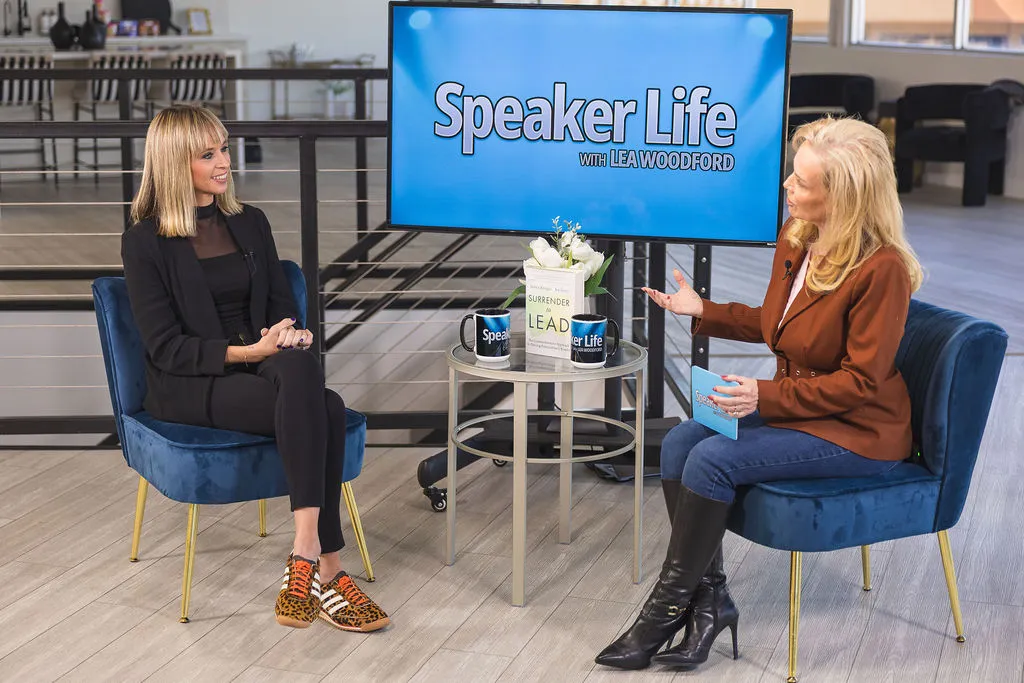
On the set of Speaker Life: Dr. Jessica Kriegel in conversation with Lea Woodford. Original photograph supplied by Speaker Life Media.
What if your next speaking engagement could open the door to an entirely new business opportunity? Most people think of professional speaking as a straightforward exchange: deliver a keynote, collect the fee, and head home. But a well-built speaking business can produce much more than a succession of stage appearances.
In an episode of Speaker Life with Lea Woodford, Dr. Jessica Kriegel—keynote speaker, author, and Chief Strategy Officer at Culture Partners—discusses her journey from corporate work to a speaking business that ultimately surpassed her salary and was later sold. The lessons go beyond finding your next gig. They speak to how you position expertise, build trust, and create a path for people who want to work with you after they hear you speak.
Why a speaking business is bigger than a speaking fee
A speaking fee can be an important source of income, but it is rarely the only value created by a great keynote. A presentation puts your ideas in front of people who may need more help after the applause ends. Some become clients. Others introduce you to decision-makers, refer you to another event, or return for a workshop.
In her conversation with Lea Woodford on Speaker Life, Jessica Kriegel discusses how her speaking work eventually out-earned her corporate salary—and became a business she could sell. That outcome did not come from thinking only about individual gigs. It came from treating expertise as an asset that could create opportunities in more than one format.
The question worth asking is not simply, “How do I get booked?” It is “What should happen after the audience hears me?”
Start with the expertise you already have
You do not need to abandon a successful career before you begin speaking. In fact, work inside an organization can provide the very stories, examples, and insight that make a keynote worth booking. Jessica describes building speaking experience while navigating her corporate career.
For an emerging speaker, that suggests a practical starting point: identify a specific problem you understand unusually well. Perhaps you have helped teams through organizational change, built a strong sales culture, or learned how to lead through uncertainty. Then build a talk that shows audiences what to do differently.
Seek appropriate opportunities to test the material and observe how people respond. Industry groups, associations, company meetings, and conferences can give you useful experience. Choose opportunities strategically: a modest event with a highly relevant audience may create more long-term value than a glamorous stage that is a poor fit.
Use LinkedIn to demonstrate value before you pitch
Visibility is not the same as authority. Posting “I love inspiring audiences” tells a planner very little about the result you can deliver. Showing how you think is much more persuasive.
Jessica and Lea discuss using LinkedIn consistently, particularly to share real examples of expertise. For a speaker, useful posts might explain a leadership mistake, unpack a difficult decision, or offer a framework a manager can apply this week. These posts become evidence of your point of view, not merely advertisements for your availability.
Make your LinkedIn headline and About section specific. Who do you serve? What problem do you solve? Which outcomes can you credibly discuss? When someone moves from one of your posts to your profile, they should understand the connection between your ideas and the keynote you offer.
Treat every keynote as the beginning of a relationship
A compelling presentation can create a room full of interest. Without a next step, that momentum disappears quickly. Jessica discusses how keynotes can open the door to consulting opportunities when speakers make it easy for interested people to continue the conversation.
That does not mean turning the final five minutes into a hard sell. It means providing a relevant resource, a clear contact option, or a reason to connect afterward. A QR code linking to a useful guide can work if it genuinely serves the audience. A specific follow-up conversation can be even better when an organization faces a larger problem.
The best next step should fit the talk. A leadership keynote might lead to a workshop or facilitated discussion. A presentation on media visibility might lead to a strategy engagement. Keep the transition natural and helpful.
Capture evidence that you can command a room
Speakers often ask whether they need a polished demonstration reel before pursuing better opportunities. Strong footage certainly helps an event planner see your delivery and audience connection. But it should communicate substance, not simply look beautiful.
As your speaking experience grows, gather high-quality clips that show you explaining a useful idea, handling a transition, and connecting with an actual audience. A few clear, credible moments often tell a stronger story than a montage with no discernible message. Ask organizers about recording permission, and keep your reel current as your positioning develops.
Books and TEDx talks can help—but they are not the business model
A book or TEDx appearance can introduce new audiences to your ideas and strengthen your credibility. Neither is a guaranteed pathway to corporate bookings. The fundamentals still matter: a defined audience, relevant expertise, a compelling presentation, and relationships with people who hire speakers.
Jessica's career illustrates the importance of thinking beyond status markers. Instead of asking which credential looks most impressive, ask which asset helps your audience understand and use your ideas. Sometimes that will be a book. Sometimes it will be a strong website, a case study, an exceptional demo reel, or an experience that leads directly to referrals.
What Surrender to Lead adds to the conversation
Jessica's book Surrender to Lead examines the relationship between control, accountability, and leadership. In the interview, that leadership perspective offers a useful parallel for speakers building a business: there are things you can prepare for, but not every outcome is yours to control.
You can refine your message, deliver well, follow up thoughtfully, and create systems that support the work. You cannot force every audience member to become a prospect or make every event lead to a booking. Strong businesses are built by repeating sound practices, learning from feedback, and allowing the right opportunities to develop.
Build a business, not just a booked calendar
If you are developing a speaking career, start with three practical moves. First, define the business problem you help an audience solve. Second, create material that demonstrates that expertise before someone hires you. Third, design a useful next step for the people who want more after your keynote.
There is nothing wrong with wanting a full speaking calendar. But the stronger goal may be building something that continues to create value between appearances. Jessica's conversation is a reminder that an extraordinary speaking business begins with an important idea—and grows through relationships, relevance, and follow-through.
Frequently asked questions
How do I start a professional speaking business?
Choose a specific audience and problem, develop a valuable talk, practice on relevant stages, collect footage and testimonials with permission, and build relationships with event organizers.
Can a keynote lead to consulting work?
Yes. A keynote can introduce your expertise to decision-makers and lead to a workshop, advisory engagement, or consulting conversation when the next step is relevant and easy to take.
Do speakers need a TEDx talk to get paid?
No. A TEDx talk can build visibility, but paid bookings depend on fit, expertise, delivery, credibility, and outreach.
What should a speaker share on LinkedIn?
Share practical insight, examples from your experience, useful frameworks, and stories that show the results you help audiences achieve.
Keep the conversation going
Be Seen. Be Heard. Get Booked.
Discover conversations, magazine features, and events that help speakers and entrepreneurs build visibility and authority.
Watch the conversation on Speaker Life's YouTube channel.


