What Your Podcast Is Missing: How to Build a Show That Grows Your Brand
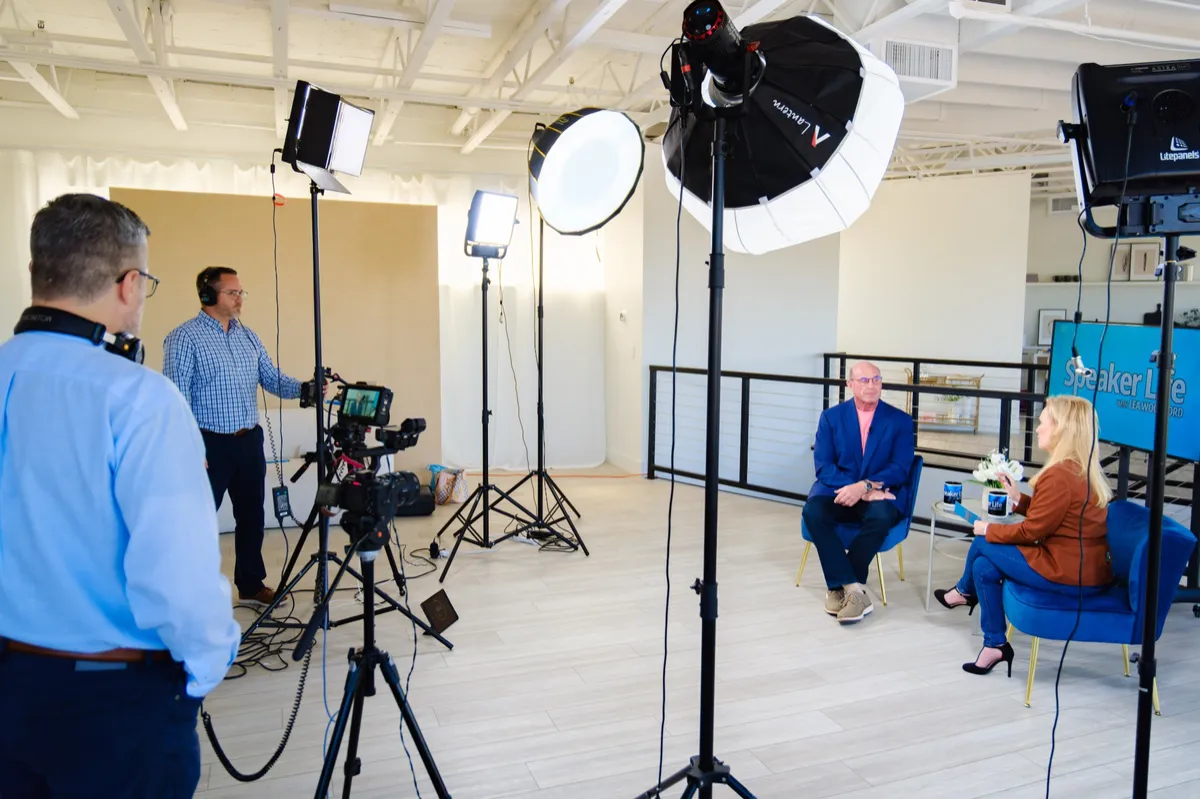
Speakers and entrepreneurs do not need to film every day to stay visible. In this Speaker Life conversation, Lea Woodford and Jason Sievert break down how the right strategy, batching, and content repurposing can turn a podcast into a brand-building asset.
Many speakers, coaches, and entrepreneurs know they should have a podcast or a video presence, but they often get stuck in the same place: they assume consistency means constantly creating more. More filming. More posting. More pressure. More hours. What starts as a visibility strategy quickly begins to feel like another full-time job.
That is exactly why this Speaker Life conversation matters. In What Your Podcast Is Missing (And How to Fix It), Lea Woodford sits down with executive producer Jason Sievert to unpack a smarter approach to content creation. Their discussion is not about chasing trends or filling a content calendar for the sake of staying busy. It is about building a show that actually supports your brand, your business, and your life.
If you have ever wondered why your podcast feels scattered, time-consuming, or disconnected from the bigger message you want to share, the answer may not be that you need more content. You may simply need a better system.
A podcast should support your brand, not drain it
One of the most valuable takeaways from this episode is the reminder that a podcast is not just a collection of interviews or episodes. It is an extension of your brand. That means your show should reflect who you serve, what you want to be known for, and the kinds of opportunities you want to attract.
For speakers especially, that matters. A podcast can help event planners, clients, and potential partners experience your voice before they ever meet you. It can showcase your values, your expertise, and your communication style. Done well, it becomes part of your authority-building ecosystem alongside your website, magazine features, social content, and live events.
Key idea: A podcast grows your brand when it is built around a clear message, a defined audience, and a plan for using each episode beyond the original recording.
Without that clarity, even a good show can feel fragmented. The visuals may not align. The topics may wander. The calls to action may be inconsistent. And the content may never fully connect back to the business goals behind the effort.
Consistency does not require filming every day
One of the most encouraging points in the episode is that showing up consistently does not mean living on camera. That mindset is exhausting, and for many business owners it is the reason content creation becomes unsustainable.
Instead, Lea and Jason focus on batching. When you plan episodes intentionally and record in blocks, you create breathing room. You reduce decision fatigue. You improve production quality. And you give yourself the ability to think strategically rather than reactively.
Batching also creates momentum. A single recording session can serve multiple purposes:
a full podcast or YouTube episode
short social clips for Instagram, LinkedIn, Facebook, and YouTube Shorts
a blog article for your website
an email teaser for your audience
quotes or talking points for future promotional content
That is where the real leverage happens. You are no longer creating one piece of content at a time. You are building an ecosystem from one strong conversation.
Content works better when it answers what people are already searching for
Another practical insight from this episode is the importance of planning content around your audience’s actual questions. Great content is not just about what you want to say. It is about what your audience needs help understanding right now.
For speakers, entrepreneurs, and media personalities, that means thinking about search behavior. What are people typing into Google, YouTube, or AI tools when they are trying to solve a problem? They might be asking how to start a podcast, how to grow a personal brand, how to stay visible without burning out, or how to turn one episode into more content. When your episode topics and blog posts align with those questions, your content becomes far more discoverable.
This is especially important in the current AI-search environment. Clear titles, practical language, and well-structured content help your material surface more easily. If your podcast topic is valuable but vague, you may be making it harder for the right people to find you.
Repurposing is not lazy. It is smart.
Some creators still treat repurposing like a shortcut. In reality, it is one of the most strategic things you can do. Most people will never consume your content in every format. Some will listen to a full episode. Others will watch a short clip. Others will discover you through a blog post or a LinkedIn caption. Repurposing allows one message to meet people where they already are.
Jason’s perspective reinforces that effective content production is not about squeezing more work into your week. It is about designing your workflow so each recording does more for you. That means identifying the most useful ideas in the conversation, shaping them into multiple formats, and distributing them consistently.
For a platform like Speaker Life, this approach makes even more sense. A podcast interview can become a blog, a newsletter topic, several short video clips, and even a conversation starter for future Summit promotions. That is not duplication. That is strategic amplification.
Before you spend money on growth, make sure your messaging is clear
The episode also touches on a point many business owners overlook: paid promotion does not fix unclear messaging. Before you invest in ads or amplified reach, your foundation needs to make sense. Who is the content for? What problem does it solve? What action do you want the audience to take next?
When those answers are muddy, growth becomes harder. Even if people find your content, they may not understand why it matters to them. But when your brand message is focused, your podcast becomes a trust-building vehicle. It helps people understand your perspective, see your expertise in action, and feel more confident moving closer to your offers.
What speakers can learn from this episode right now
If you are a speaker trying to build visibility, Jason’s conversation with Lea offers a practical reset. You do not need to do everything. You need to do the right things in the right order.
Clarify your message: Make sure your show reflects your brand and the audience you want to reach.
Batch your content: Create in focused sessions instead of living in constant production mode.
Repurpose intentionally: Turn each conversation into clips, articles, and promotional assets.
Use search-friendly topics: Build content around the questions your audience is already asking.
Connect content to business goals: Know what each episode is helping you build.
That kind of system makes it easier to stay visible without losing your voice or your time. It also makes your content more effective because it is no longer random. It is aligned.
The bigger takeaway
The biggest shift in this conversation is simple but powerful: your podcast should not just be something you produce. It should be something that works for you.
When your content is built with purpose, a podcast becomes far more than another marketing task. It becomes a relationship-building tool, a credibility tool, and a discoverability tool. It helps people experience the heart of your message before they ever step into your world.
For thought leaders, authors, speakers, and entrepreneurs, that is where real visibility begins. Not in doing more, but in building smarter.
Want more visibility for your message?
Explore Speaker Life Media for conversations, resources, and opportunities designed to help speakers, coaches, and entrepreneurs get seen, heard, and booked.


